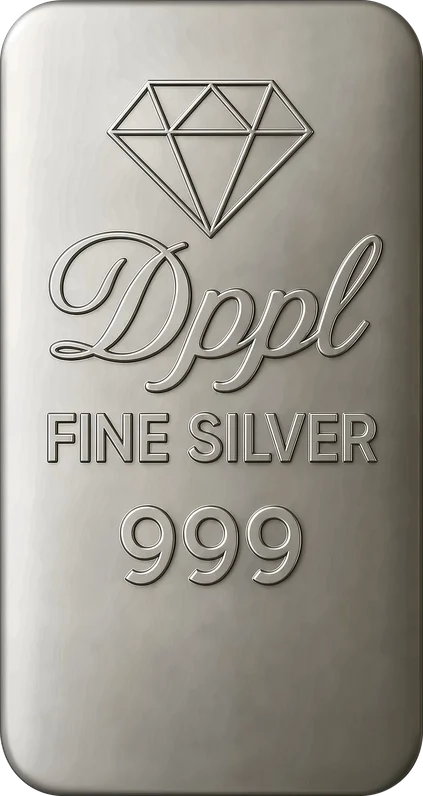
100 g Silver Bar
999 fine · sealed & stamped
The classic first holding — pocket-scale weight with the full DPPL diamond stamp. Ideal for gifting, savings, and starting a position.
Rate by weight · making charges extra
ENQUIRE · 100 GRates · New Road ledger
Silver bullion · 999 fine · Weighed before your eyes
Fetching today’s rate…
The collection
Making charges apply on bars. Prices are calculated from the day’s published silver rate by weight and are exclusive of making charges, which are added at the counter and shown on your invoice.
999 fine · sealed & stamped
The classic first holding — pocket-scale weight with the full DPPL diamond stamp. Ideal for gifting, savings, and starting a position.
Rate by weight · making charges extra
ENQUIRE · 100 G999 fine · sealed & stamped
The investor’s workhorse — meaningful weight at a tighter premium per gram, without the handling bulk of a kilo.
Rate by weight · making charges extra
ENQUIRE · 500 G999 fine · sealed & stamped
The lowest premium per gram in the house. Preferred by serious investors and businesses accumulating in size.
Rate by weight · making charges extra
ENQUIRE · 1 KG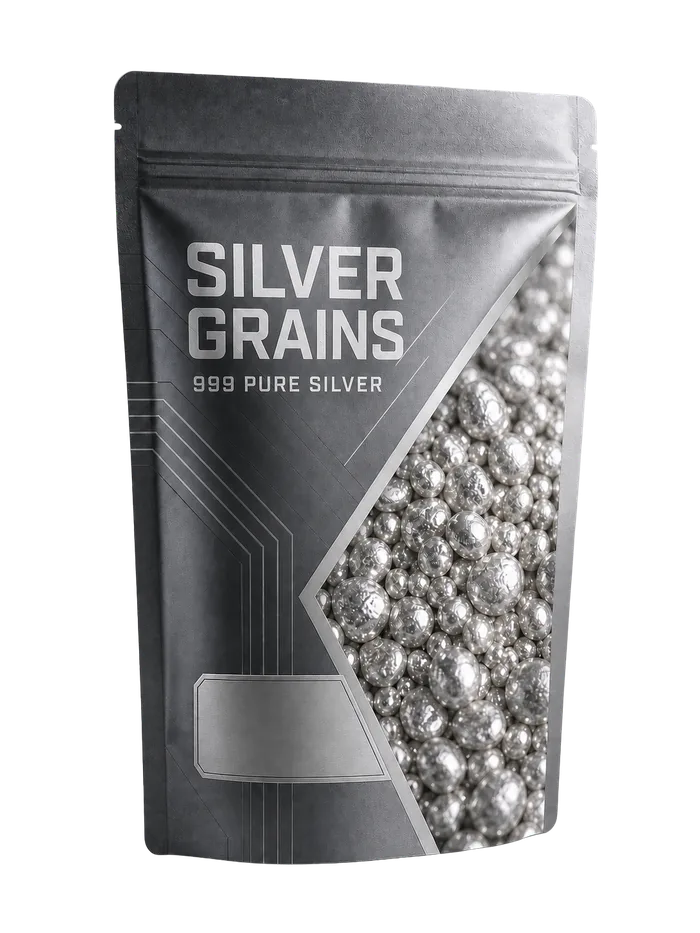
999 fine · sealed & stamped
Loose fine-silver grain for jewellers, manufacturers, and ritual use — sold to the exact gram you need, no more.
ENQUIRE · GRAINSThe DPPL Journal
History
Silver was money before coins existed. Mesopotamian merchants weighed out silver by the shekel four thousand years ago, and the metal has been at the centre of trade, empire and industry ever since.
Read the article →History
Silver has circulated in the Kathmandu Valley for well over a millennium — as coinage, as craft, as dowry, and as the trade that built the street DPPL stands on today.
Read the article →Buying well
The daily rate is only the starting point. Understanding the tola, the sale–purchase spread and making charges tells you what you will actually pay — and what you will actually receive when you sell.
Read the article →Buying well
A genuine bar of fine silver tells you what it is. Here is what to look for, what to insist on, and the simple checks that separate real metal from an expensive mistake.
Read the article →
Provenance
Diamond Palace Pvt. Ltd. was established in 2080 B.S. with a simple conviction: that buying silver in Nepal should be as transparent as buying rice. From the 5th floor of Sasa Complex on New Road — the street where Kathmandu has traded for over a century — we deal in one thing only: fine silver, 999 purity, in bars of 100 g, 500 g, and 1 kg, and in loose grains for jewellers and manufacturers.
Every bar we sell carries the DPPL diamond stamp, is weighed on calibrated scales in front of the customer, and leaves the counter with a full VAT invoice. Every bar we sold, we also buy back — at the purchase rate published on this page, the same day. That is the whole business model: honest metal, honest weight, honest paper.
Common questions
Diamond Palace Pvt. Ltd. trades from the 5th floor of Sasa Complex on New Road, Kathmandu — the street that has been Nepal’s precious-metal market for generations. We deal only in 999 fine silver: bars of 100 g, 500 g and 1 kg, and loose silver grain sold by weight. Every piece is weighed on calibrated scales in front of you and leaves with a full invoice, and we buy back documented metal at the purchase rate published here.
The current silver rate for Kathmandu — both the sale price and the purchase price, per tola and per 10 grams — is published at the top of this page and updated each morning from the official Kathmandu bullion market reference. One tola is 11.6638 grams. Rates are confirmed at the counter at the time of your transaction.
Both sides of the trade run through the counter. Diamond Palace Pvt. Ltd. supplies investment-grade 999 fine silver bars and industrial silver grain to households, jewellers and businesses in Kathmandu, in quantities from 100 grams upward. For larger or repeat commercial orders, call the counter on 01-5915052 to discuss supply and pricing.
999 fine means the metal is 99.9% pure silver — the standard for investment bullion, and higher than sterling silver, which is 92.5%. Every Diamond Palace Pvt. Ltd. bar is stamped with its fineness, its weight, and the DPPL diamond mark, so its purity can be verified by anyone at any time.
The published rate is the price of the metal by weight. Bars also carry a making charge covering refining, casting, stamping and packaging, which is added at the counter and itemised separately on your invoice. Making charges are lower per gram on larger bars, which is why a 1 kg bar costs less per gram than ten 100 g bars.
Yes. We buy back bullion we have sold at the purchase rate published on this site on the day of the buy-back. Bring the metal and the original invoice; the bar is weighed and checked against the paperwork, and payment is made at the counter. Documentation is what keeps a bar liquid, so keep your invoices safe.
Diamond Palace Pvt. Ltd. is open Sunday to Friday, 10:30 to 18:00 NPT, closed Saturdays and public holidays. The counter is on the 5th floor of Sasa Complex, New Road, Kathmandu 44600. Call 01-5915052, or message +977 9805617932 on WhatsApp before visiting for large orders.
The counter